
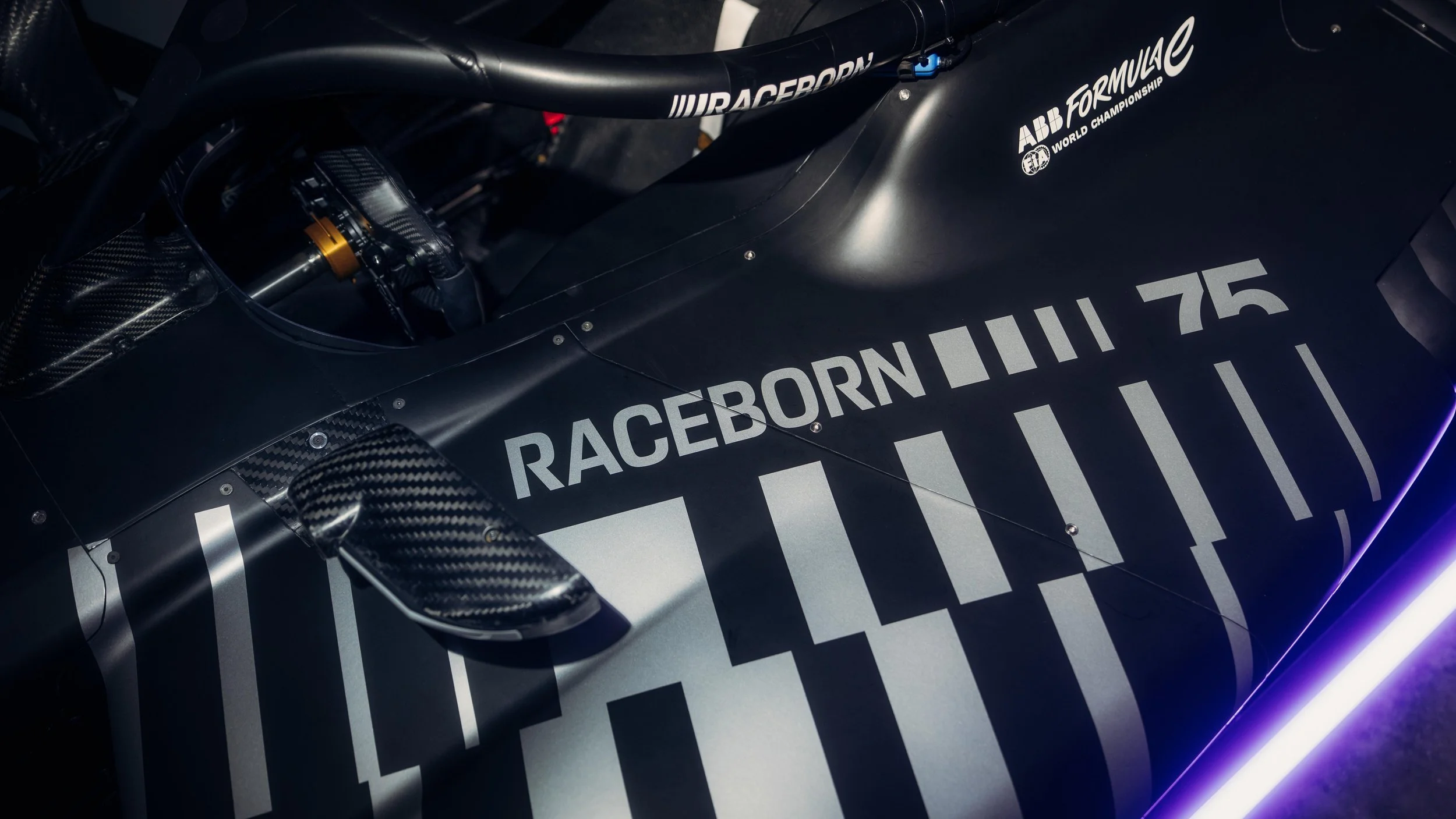
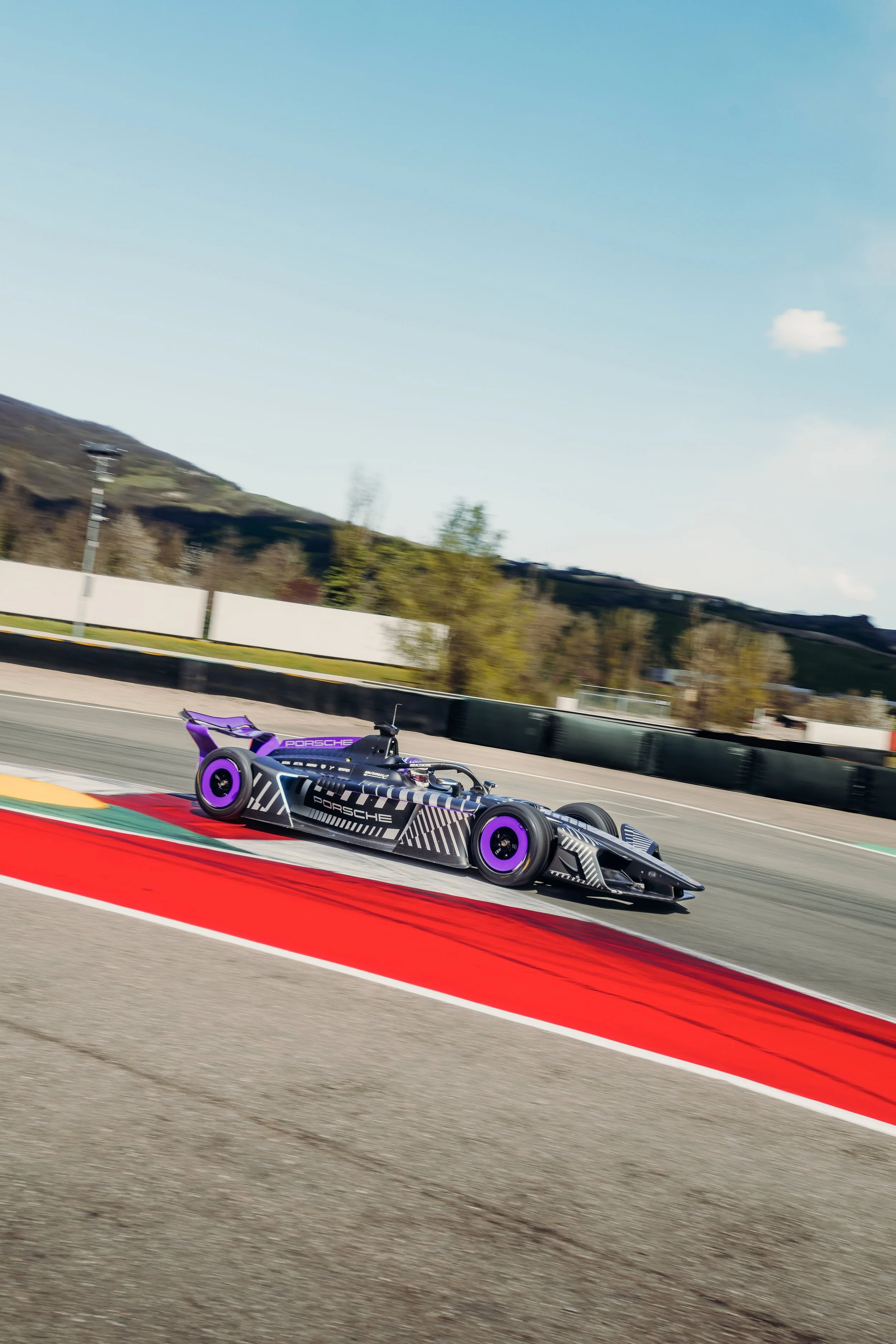
A new chapter in all-electric motorsport: With the 975 RSE, Dr. Ing. h.c. F. Porsche AG presents its future Formula E racing car. The single-seater complies with the rules of the fourth generation of Formula E cars and will be used from next season.
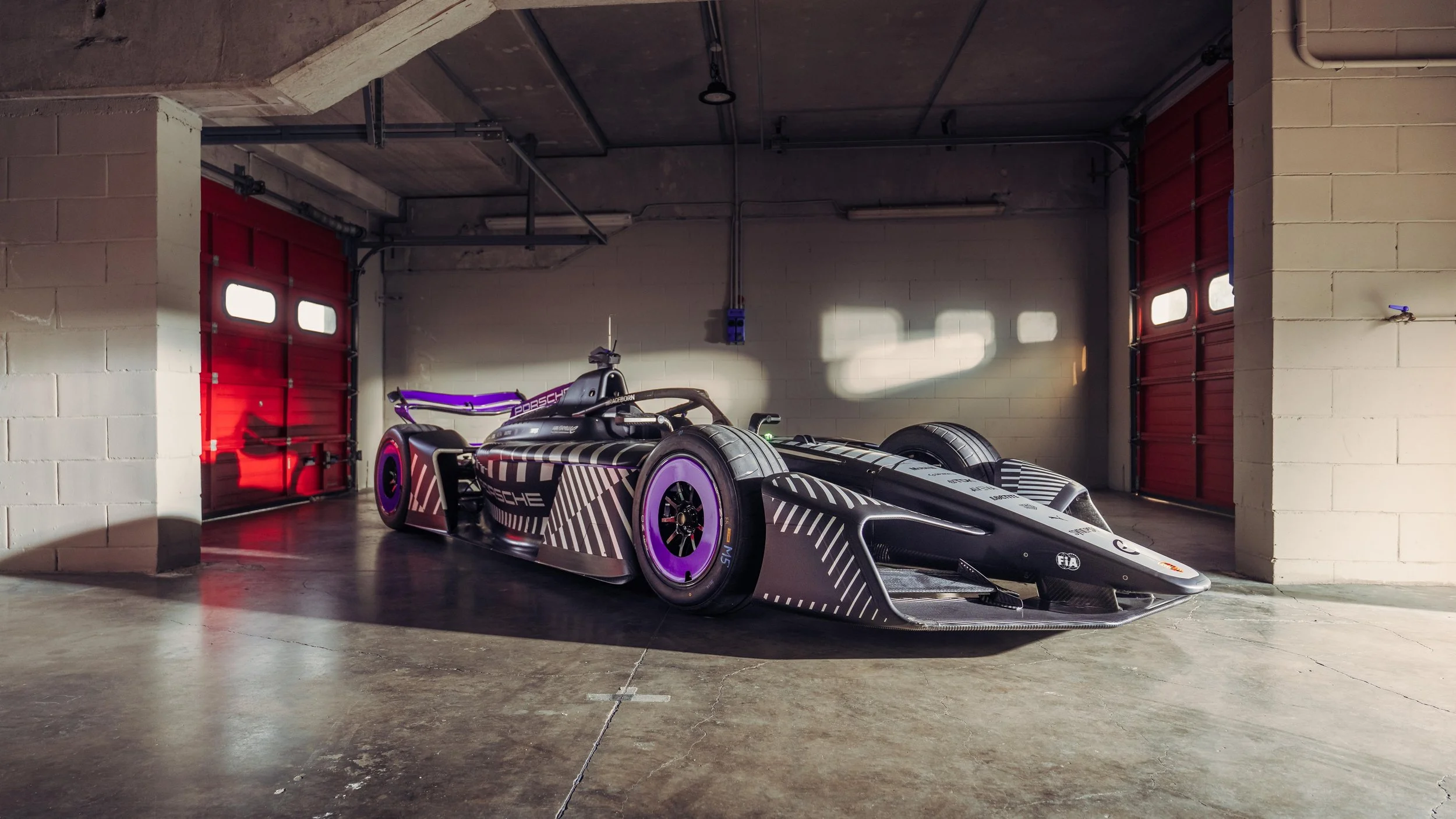
The "GEN4" brings the biggest leap in performance in electric motorsport to date: 600 kW (816 hp) of power, permanent all-wheel drive, new tyres and significantly more downforce put Formula E in the slipstream of the fastest single-seater racing cars in the world.
"The GEN4 shows how much electric vehicles have evolved," says Thomas Laudenbach, Vice President Porsche Motorsport. "When the championship started in 2014, each driver needed two cars per race. One battery alone was not enough for the entire race distance. That is long gone. Since 2024, we have been developing a race car that will take us to Formula 2 level. E-vehicles are not only moving closer to familiar standards: their strengths and advantages are also becoming increasingly visible – on the route and on the road."
More downforce for more performance
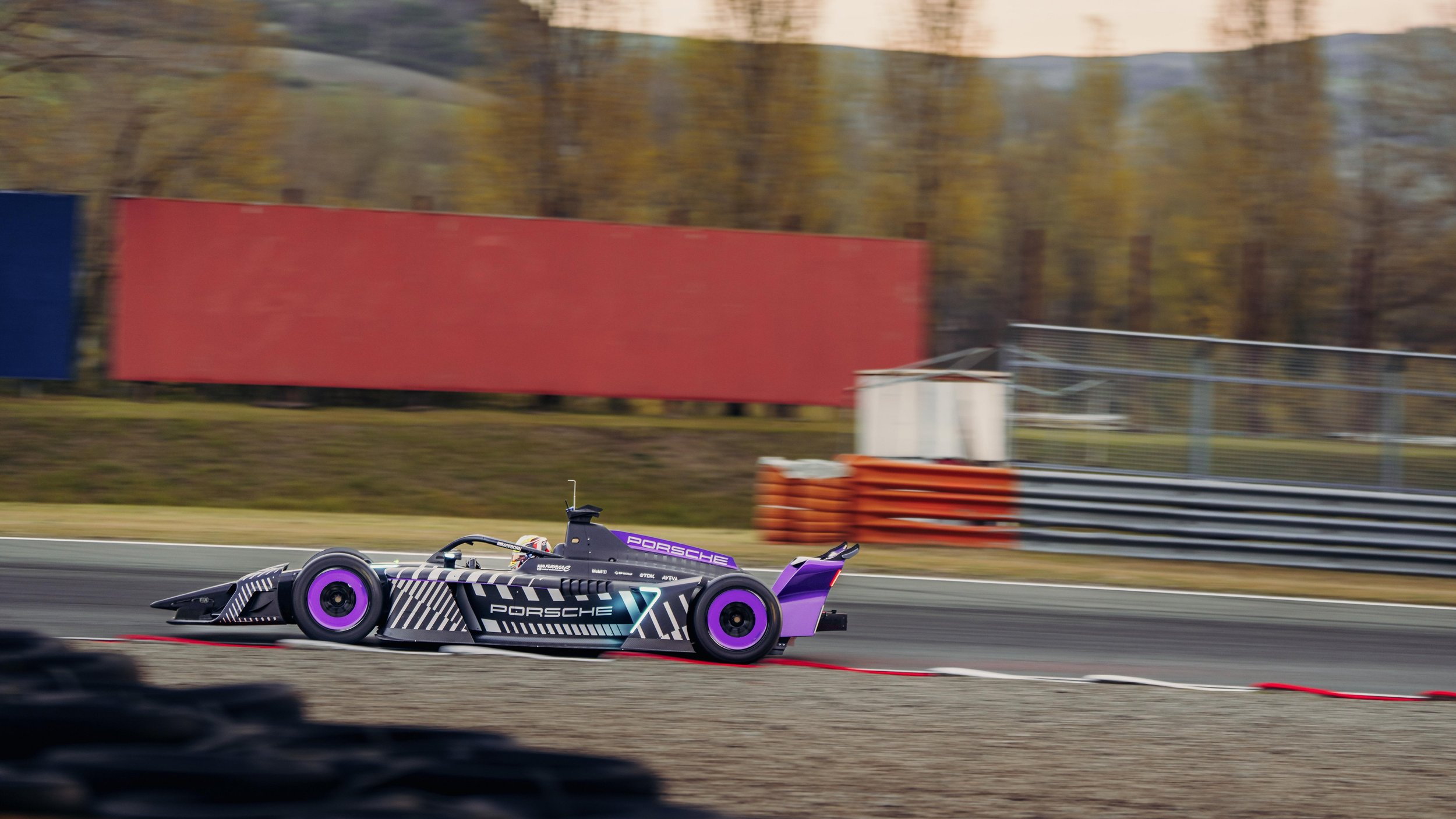
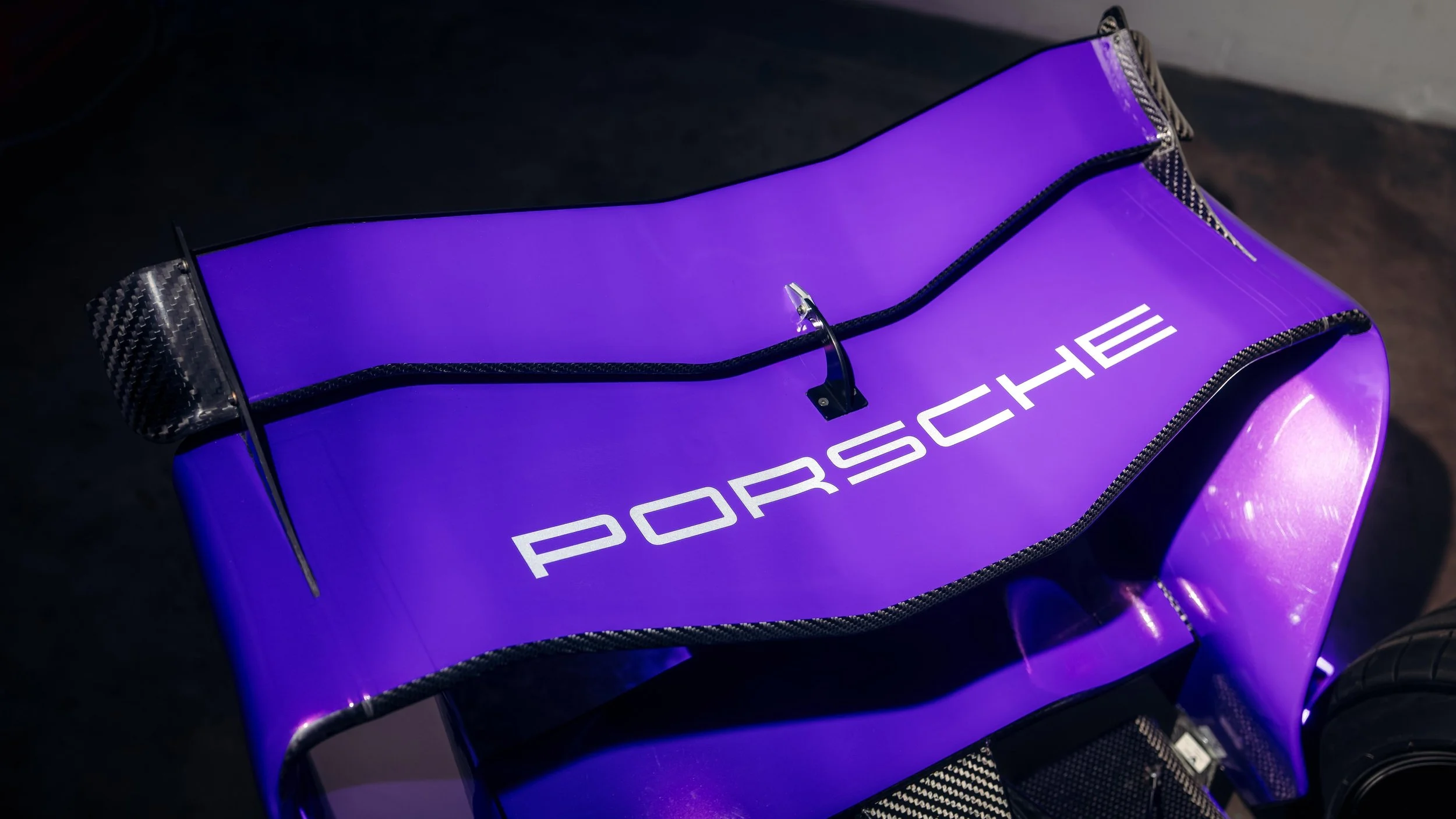
For the first time, aerodynamic downforce significantly increases the grip of the Formula E cars. Together with new tires and permanent all-wheel drive, this makes much higher cornering speeds possible. Olivier Champenois, Technical Project Manager Formula E at Porsche Motorsport: "Within about a decade, Formula E has become so fast that we now need aerodynamic downforce. However, downforce is accompanied by drag and increases energy consumption. To further reflect the issue of efficiency, we have two aero packages with different body components: a low-downforce package with less drag for the races and a high-downforce package with more downforce for qualifying, where energy consumption is not an issue. We're talking about up to 150 percent more downforce than before."
Porsche in-house developments: lighter, more durable, more efficient
Even in the current Formula E Porsche, the 99X Electric of the "GEN3 Evo" generation, the efficiency of the powertrain is well over 97 percent. Less than 3 percent of the energy is lost on the way from the battery to the wheel – for example, due to friction between mechanical components. "Because efficiencies are approaching perfection, other topics moved further up in the GEN4 specifications, including potentials in terms of weight, durability and cost – similar to EVs for the road," says Champenois. "The 975 RSE produces 71 percent more maximum power than its predecessor. At the same time, we were able to make many parts lighter: Although we develop more components ourselves in the GEN4 than in the GEN3, the total weight of our parts package was only allowed to increase by 5 kilograms."
In Formula E, manufacturers are primarily developing those technical scopes that are also relevant for electric road vehicles. In-house developments include operating software, pulse inverter, electric motor, transmission, differential, drive shafts and other drive components on the rear axle as well as cooling, carrier and chassis components on the rear axle. With the introduction of the GEN4, several components are added: the DC/DC converter and the brake-by-wire system, other electronic features and wiring harnesses, as well as control units for the hydraulic differentials. For cost reasons, the battery remains a supplied standard component. It must not be developed.
Same concept, faster races
Florian Modlinger, Director Formula E at Porsche: "The concept remains the same: the regulations require us to maximise the efficiency of our cars in all respects. However, the races are likely to become even more attractive because the new vehicles are significantly faster. The acceleration is impressive, and we expect top speeds of up to 335 km/h. I'm very excited to see how the fans will react to it."
Florian Modlinger, Overall Project Manager Formula E at Porsche
The Porsche 975 RSE follows the current 99X Electric. Porsche's most successful single-seater car to date has won four world championship titles in the past three seasons. In August, he will contest his last race; at the finale of the current season in London, Porsche wants to fight for more titles. The 975 RSE is expected to make its racing debut in December. His name refers to the 75th anniversary of Porsche Motorsport this year – a success story that will also be shaped by electric racing in the future.
For the time being, Porsche Motorsport has until October to develop its most extensive hardware package to date for Formula E as far as possible. Subsequently, the focus will be on the continuous optimization of the software. The Porsche customer team is also testing the new vehicle before the FIA homologates the construction status in the autumn. In November 2025, the 975 RSE took to the track for the first time. By the beginning of April, he had collected 1,860 test kilometers. Porsche presents the new vehicle as the current manufacturers' world champion in Formula E.
More voices about the new vehicle
Pascal Wehrlein, Porsche works driver: "The new Porsche 975 RSE is a super cool race car. The GEN4 is really fast and is a lot of fun for us drivers. I think it will cause an aha experience for many fans and critics. I also like the look of the 975 RSE. The aerodynamics give the car an uncompromising look, and our livery for the tests looks pretty cool."
Pascal Wehrlein, Porsche works driverNico Müller, Porsche works driver: "The 975 RSE and its opponents are a massive step for the sport. I'm a big fan of how much you can demand from the car in terms of driving. Especially in qualifying, when everyone goes to the limit, it should be spectacular - especially because of the brutal acceleration out of the corners. I'm glad that I was involved in the simulator work from the beginning. Pascal and I share the test work. That's good, because it allows us to tailor the 975 RSE exactly to our needs."
Nico Müller, Porsche works driver
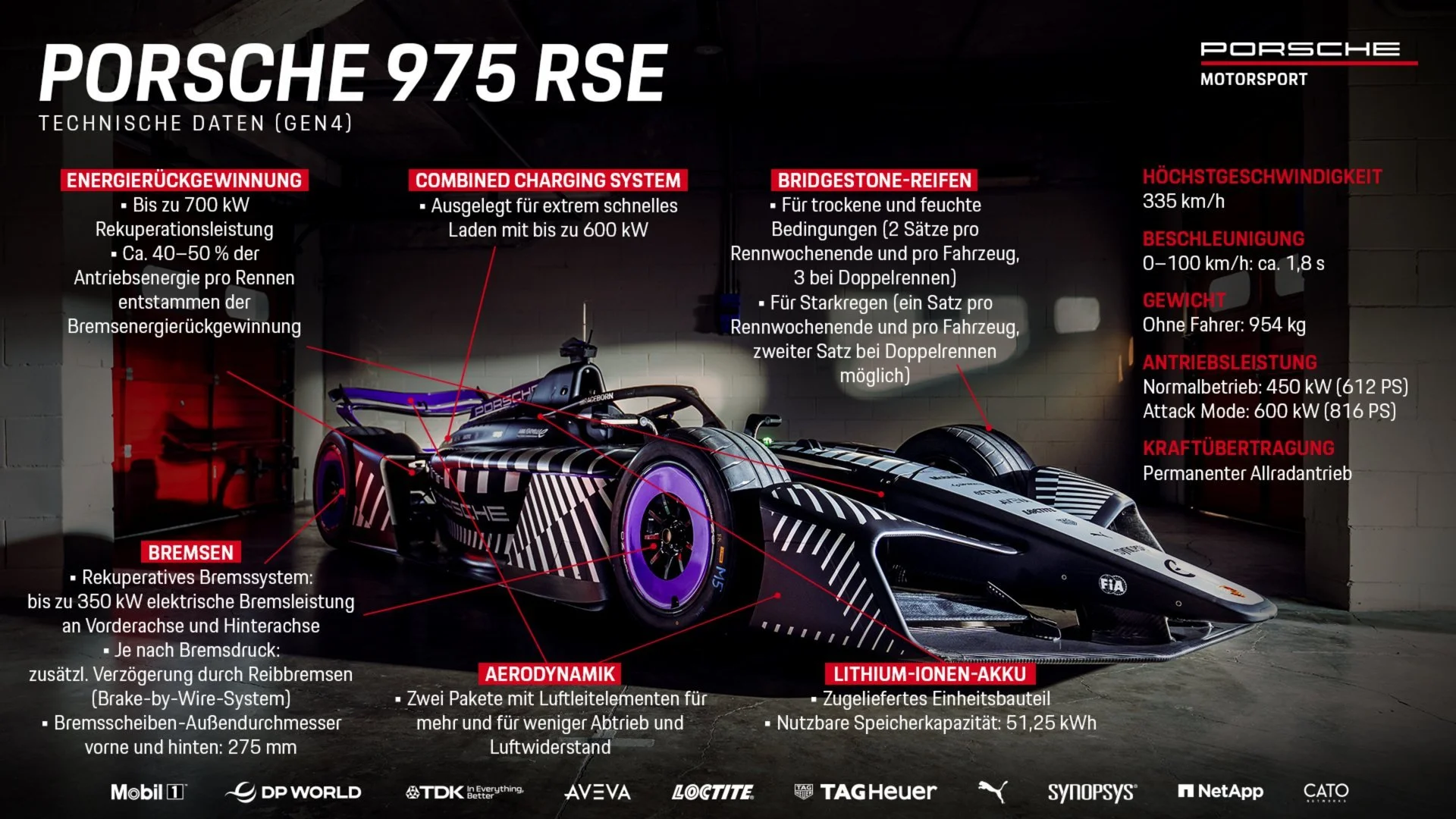
Preliminary technical data – Porsche 975 RSE
Drive power
• Normal operation: 450 kW (612 hp)
• Attack mode: 600 kW (816 hp)
Power transmission
• Permanent all-wheel drive
Acceleration
• 0–100 km/h: approx. 1.8 s
Energy recovery
• Up to 700 kW recuperation power (brake energy regeneration)
• Approx. 40 to 50 percent of the drive energy per race comes from brake energy recovery
Brakes
• Recuperative braking system: up to 350 kW of electric braking power on both the front axle and the rear axle
• Depending on the brake pressure: additional deceleration due to friction brakes (brake-by-wire system)
• Brake disc outer diameter front and rear: 275 mm
tires
• Bridgestone tyres for dry and wet conditions (two sets per race weekend and per car, three for double races)
• Bridgestone rain tyres for heavy rain (one set per race weekend and per car, second set possible for double races)
Energy Storage System (RESS)
• Lithium-ion battery
• Supplied unit component
• Usable storage capacity: 51.25 kWh
CCS (Combined Charging System)
charging system • Designed for extremely fast charging with up to 600 kW charging power
Weight and dimensions • Weight: 954 kg without driver
• Length: up to 5,540 mm, width: up to 1,800 mm, height: up to 1,150 mm
• Wheelbase: 3,080 mm
• Front track: 1,482 mm
• Rear track: 1,443 mm
aerodynamics
• Two packages with air deflectors for more and less downforce and drag
Key in-house developments DC
/DC converter, pulse inverter, electric motor, transmission, electronic features and wiring harnesses, front and rear differentials including control units, drive shafts and other drive components on the rear axle as well as cooling, Carrier and chassis components on the rear axle, brake-by-wire system, operating software
Essential unit components
Chassis and fairing, wheels and tires, drive, cooling and chassis components on the front axle, accumulator