
World Championship-winning Porsche 99X Electric joins the museum collection
Pascal Wehrlein’s world championship-winning Porsche 99X Electric is now on display at the Porsche Museum. Visitors can view the racing car at close quarters. After four years in the ABB FIA Formula E World Championship, it has returned home to Stuttgart as the most successful single-seater yet from Dr. Ing. h.c. F. Porsche AG. With six of a possible ten FIA World Championship titles, it is also the most successful model of Formula E’s third car generation.
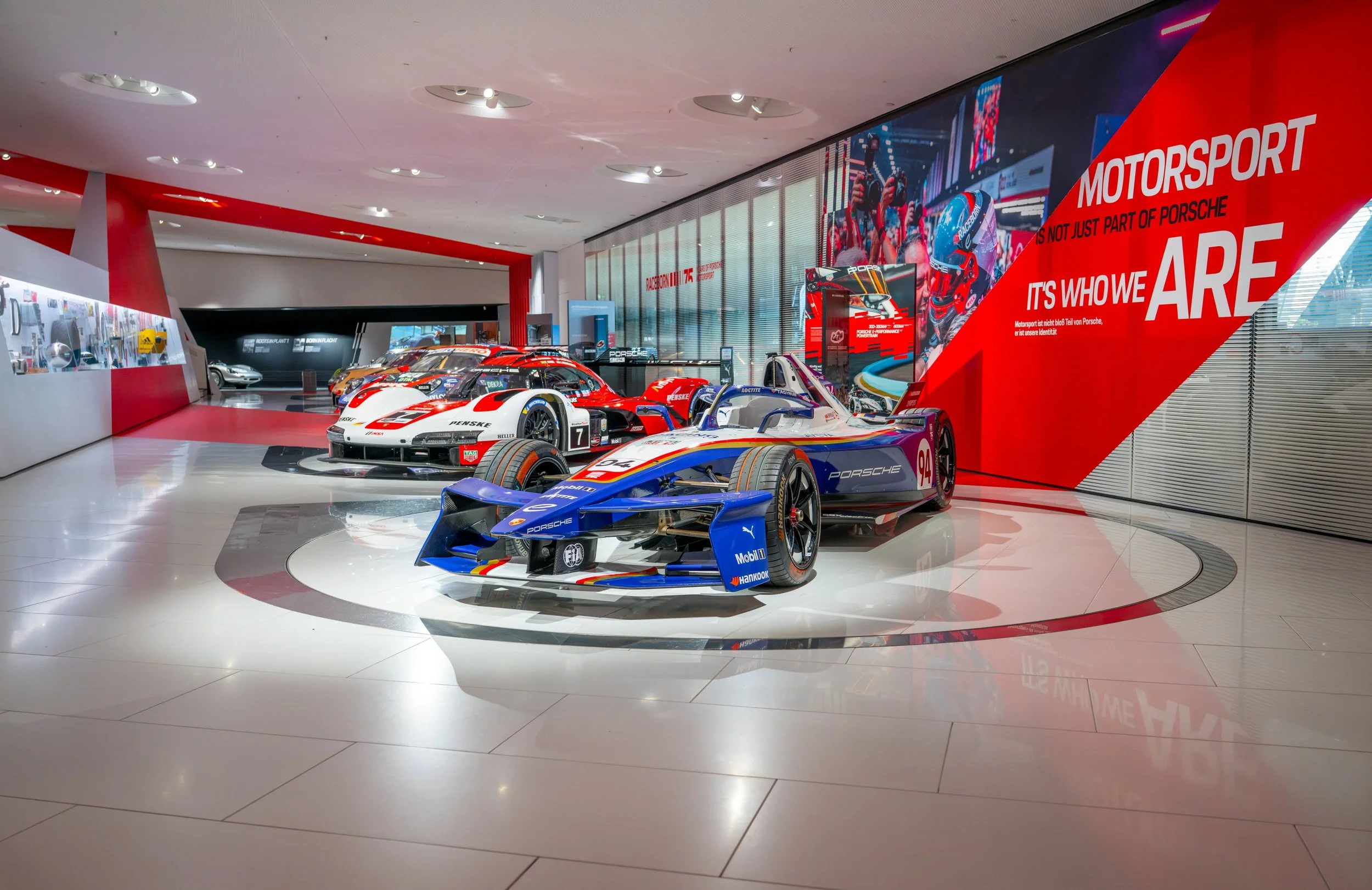
The exhibit is Wehrlein’s original world championship-winning car from the recently completed 2025/2026 season. The Porsche factory driver secured the Drivers’ Championship for a second time in London on 16 August. He remains the only German single-seater World Champion since Nico Rosberg’s 2016 Formula 1 title with Mercedes-AMG. Wehrlein now also shares a record: he and Frenchman Jean-Éric Vergne are the only drivers to have won the Formula E Drivers’ Championship twice. Three weeks before London, at the penultimate race weekend in Tokyo, Porsche had won the Manufacturers’ Championship for the second time.
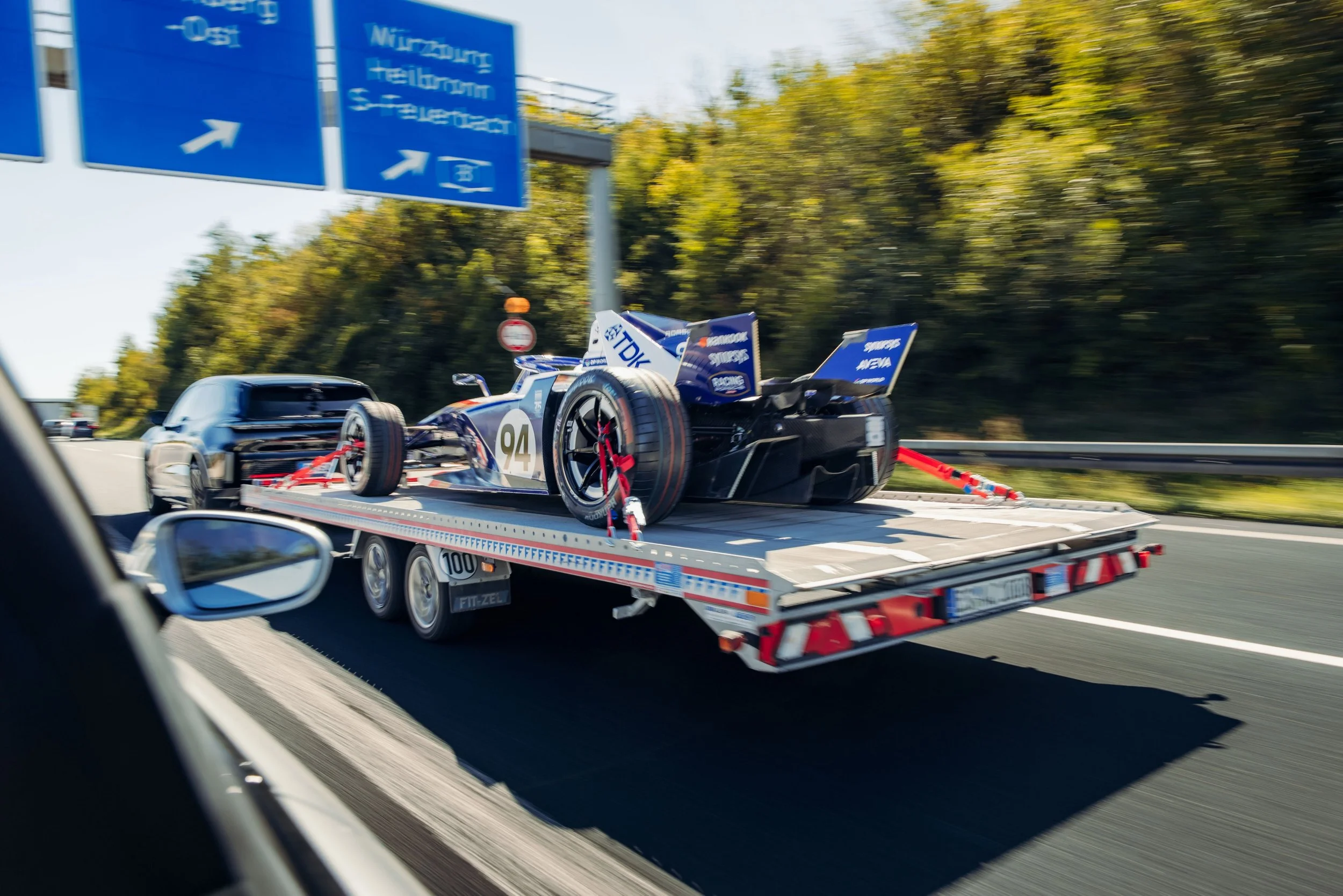
For what is expected to be its final journey, Wehrlein’s 99X was taken by trailer to the Porsche Museum. Final preparations took place in the motorsport facilities at the Porsche Development Centre in Weissach. A Cayenne Turbo Electric then towed the racing car to Zuffenhausen. The pairing symbolised technology transfer from the racetrack to the road. Technology from the 99X also features in the latest all-electric Porsche model, including direct oil cooling for the rear electric motor. Both vehicles can recover energy under braking with up to 600 kW of power.
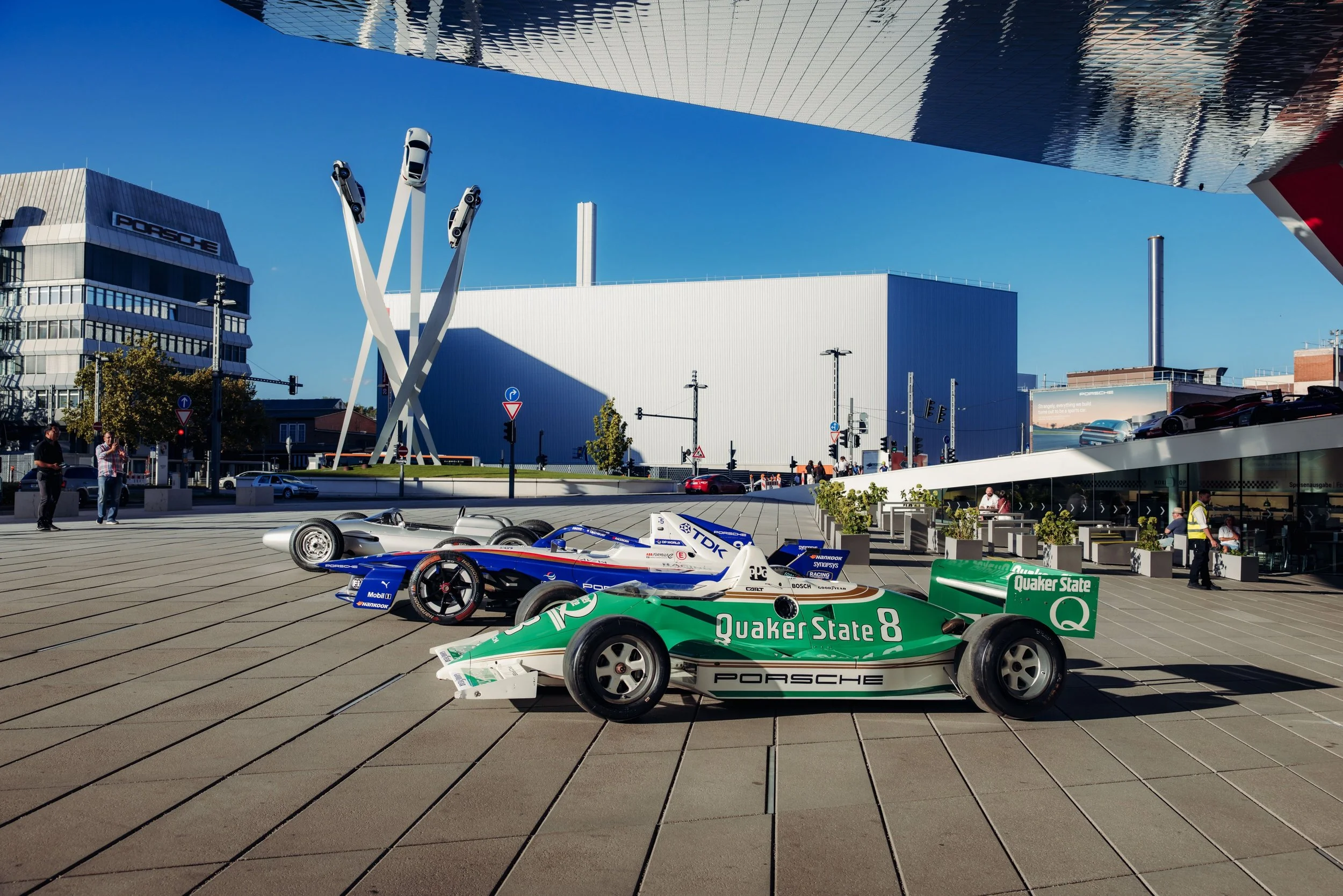
Special exhibition “Raceborn – 75 Years of Porsche Motorsport”
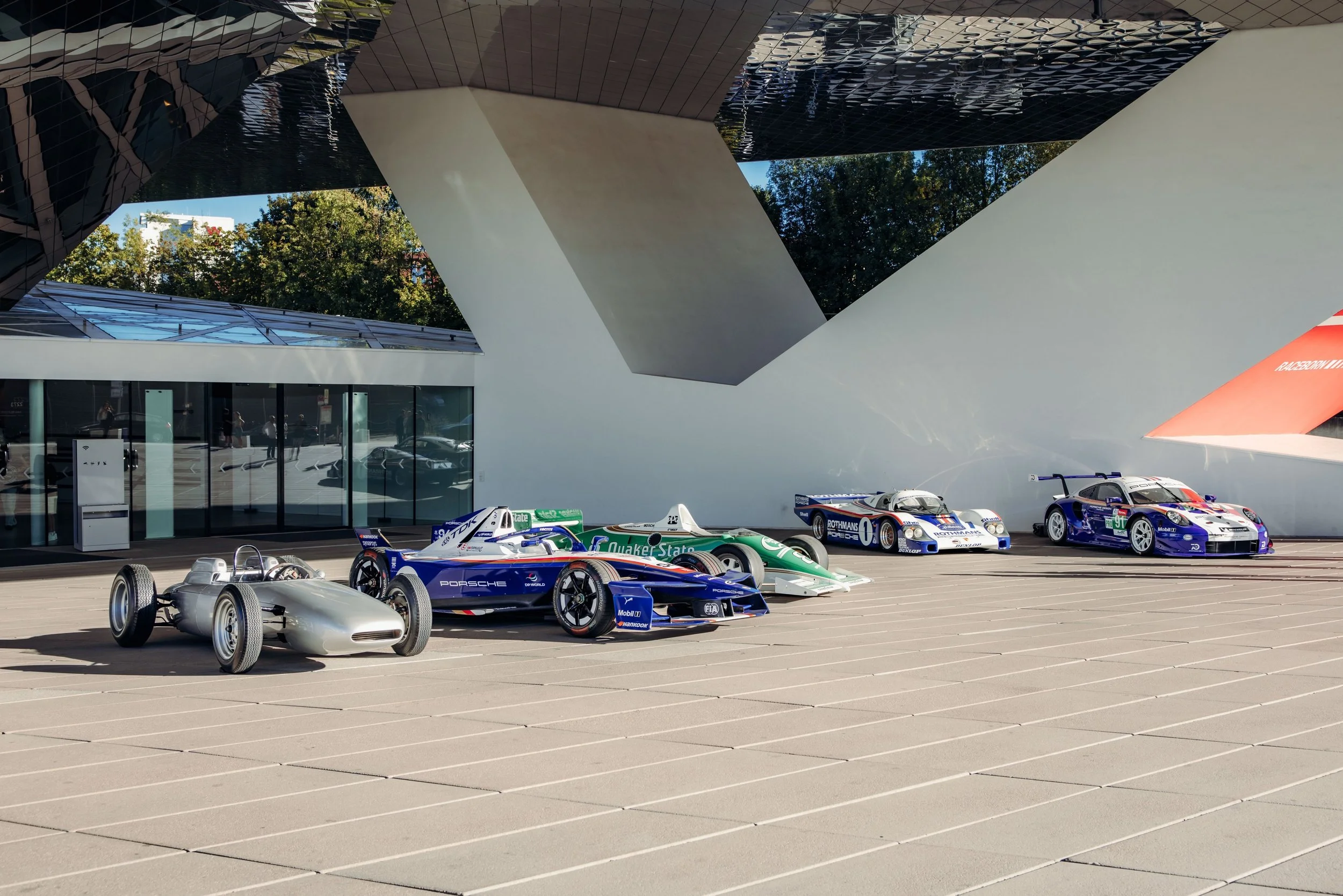
As it did at the season finale, the 99X wears historic colours in the museum. The design draws on the liveries of several successful Porsche racing cars from the 1980s. It pays tribute to Porsche’s 75-year motorsport history. This began in 1951, when the Porsche 356 SL took a class win at Le Mans. The Porsche Museum is marking the anniversary with a special exhibition until 17 January 2027.
The story of the Porsche 99X Electric (GEN3)
When Porsche announced its switch from endurance racing to Formula E in 2017, the company also had to build new expertise. Until then, hybrid sports prototypes competing in races of at least six hours had been Porsche Motorsport’s core discipline. An all-electric single-seater for sprint races took the development team into new territory. Success came with the arrival of Formula E’s third car generation, the GEN3. It brought major technical advances, including a lighter battery, brake energy recovery at the front axle and 100 kW more power.
During the first GEN3 season in 2022/2023, the Porsche Formula E Team remained in title contention until the finale in London. Ultimately, Porsche’s first Formula E title came not through factory driver Wehrlein, but through Jake Dennis of Porsche customer team Andretti Formula E. Wehrlein achieved the feat at the same venue one year later. This followed a record season with seven wins for the then TAG Heuer Porsche Formula E Team in 2023/2024.
Testing of the further-developed GEN3 Evo was under way in parallel. The final version of the 99X featured temporary all-wheel drive and proved another title winner. In 2024/2025, Porsche won the Manufacturers’ World Championship and the Teams’ World Championship for the first time.
Thomas Laudenbach, Vice President Porsche Motorsport: “The Porsche 99X Electric is one of the boldest and most advanced cars Porsche has ever built. When the brand announced its entry in 2017, Formula E was still at an early stage. Drivers had to switch to a second car halfway through a race because one battery charge could not cover the full distance. Since then, the series has made major strides; developments that we have accompanied from a technological perspective in Weissach: better battery technology, more energy recovery, more power and 600 kW fast charging under extreme conditions. Porsche sports cars benefited from this as well. With the 99X, we have taken our place as the manufacturer at the top of electric motorsport. On behalf of Porsche Motorsport, I thank everyone involved in the project, as well as all our partners and sponsors. Together, they have written the next chapter in Porsche Motorsport history.”
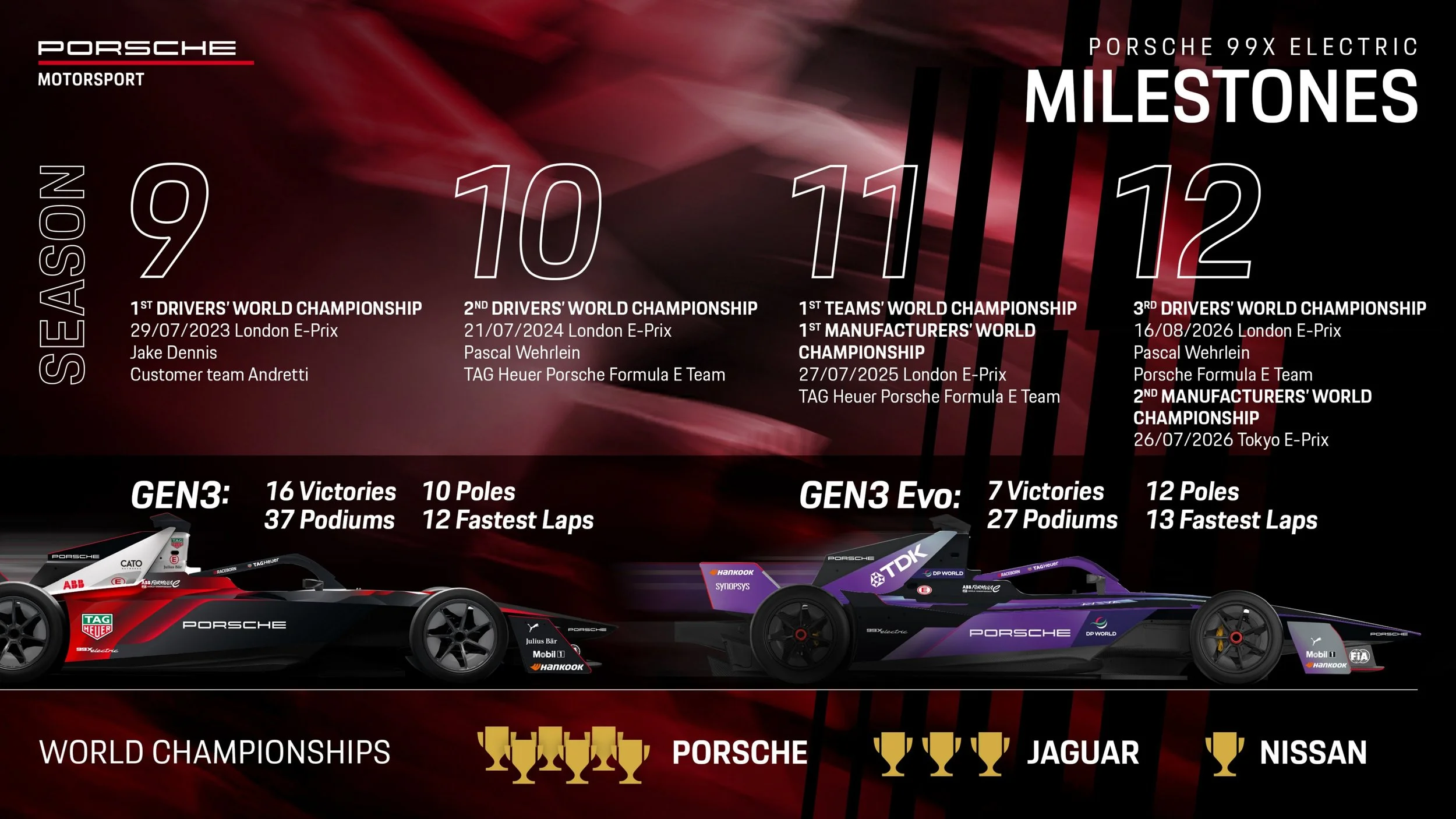
Statistics – Porsche 99X Electric (2022–2026; GEN3 and GEN3 Evo)
• World Championship titles: 6
• Race wins: 23
• Pole positions: 22
• Customer teams: Andretti Formula E and CUPRA KIRO
• Most drivers’ titles: Pascal Wehrlein (2)
• Most pole positions: Pascal Wehrlein (10)
Technical data – Porsche 99X Electric (2024–2026; GEN3 Evo)
Drive power
• Normal operation: 300 kW (408 PS)
• Attack Mode, qualifying duels: 350 kW (476 PS)
Drivetrain
• Normal operation: rear-wheel drive
• Attack Mode, qualifying duels, race starts: all-wheel drive
Acceleration
• 0–100 km/h: approx. 2.0 s
Energy recovery
• Up to 600 kW recuperation power (brake energy recovery)
• Approx. 50 per cent of the drive energy per race comes from brake energy recovery
Brakes
• Regenerative braking system: up to 250 kW of electric braking power on the front axle, up to 350 kW on the rear axle
• Additional deceleration through friction brakes on the front axle (brake-by-wire system)
• Front brake disc outer diameter: 258 mm
• Friction brakes on the rear axle active only in an emergency (in the event of recuperation failure)
Lithium-ion battery
• Supplied single-spec component
• Usable storage capacity: 38.5 kWh
• Weight: 285 kg
CCS charging system (Combined Charging System)
• Designed for ultra-fast charging with up to 600 kW charging power
Weight and dimensions
• Weight: 862 kg incl. driver
• Length: 5016 mm, width: 1700 mm, height: 1023 mm
Key in-house developments
Pulse inverter, electric motor, gearbox, differential, drive shafts and further drivetrain components on the rear axle, as well as cooling, carrier and suspension components on the rear axle, operating software.