
Carrera Cup race winner and championship contender Aaron Jeansonne and Endurance Challenge Cayman Pro-Am champion Andrew Davis found familiar 911 characteristics, strong braking performance, and an approachable limit during their first laps in the all-new Porsche 911 Challenge.
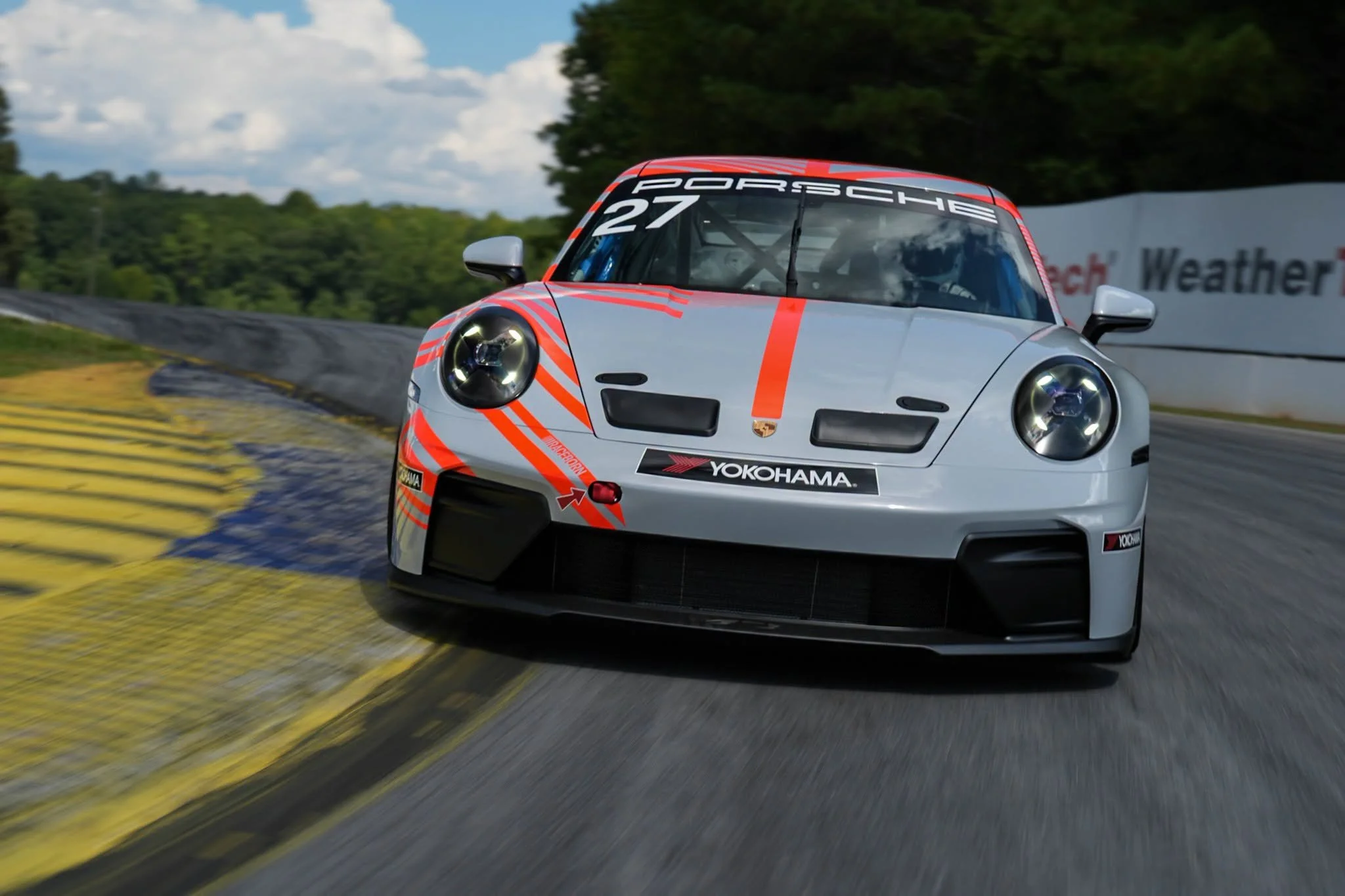
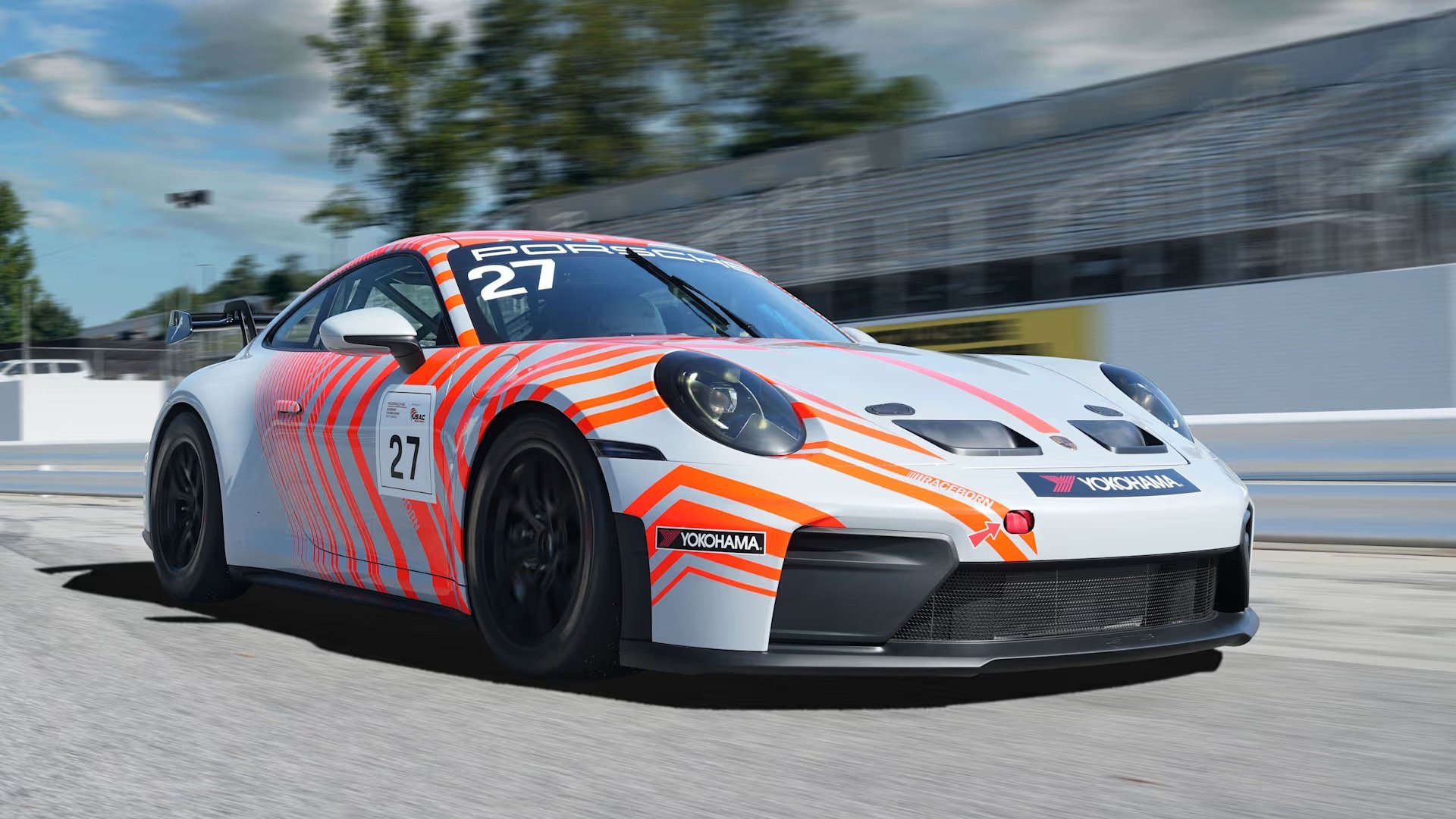
The all-new Porsche 911 Challenge will introduce a new entry point into North American Porsche customer racing when it makes its competition debut in 2027.
Drivers will be able to race the car next year in Porsche Sprint & Endurance Challenge North America by Yokohama, Porsche Sprint Trophy PCA, and the recently announced Porsche Sprint Trophy POC.
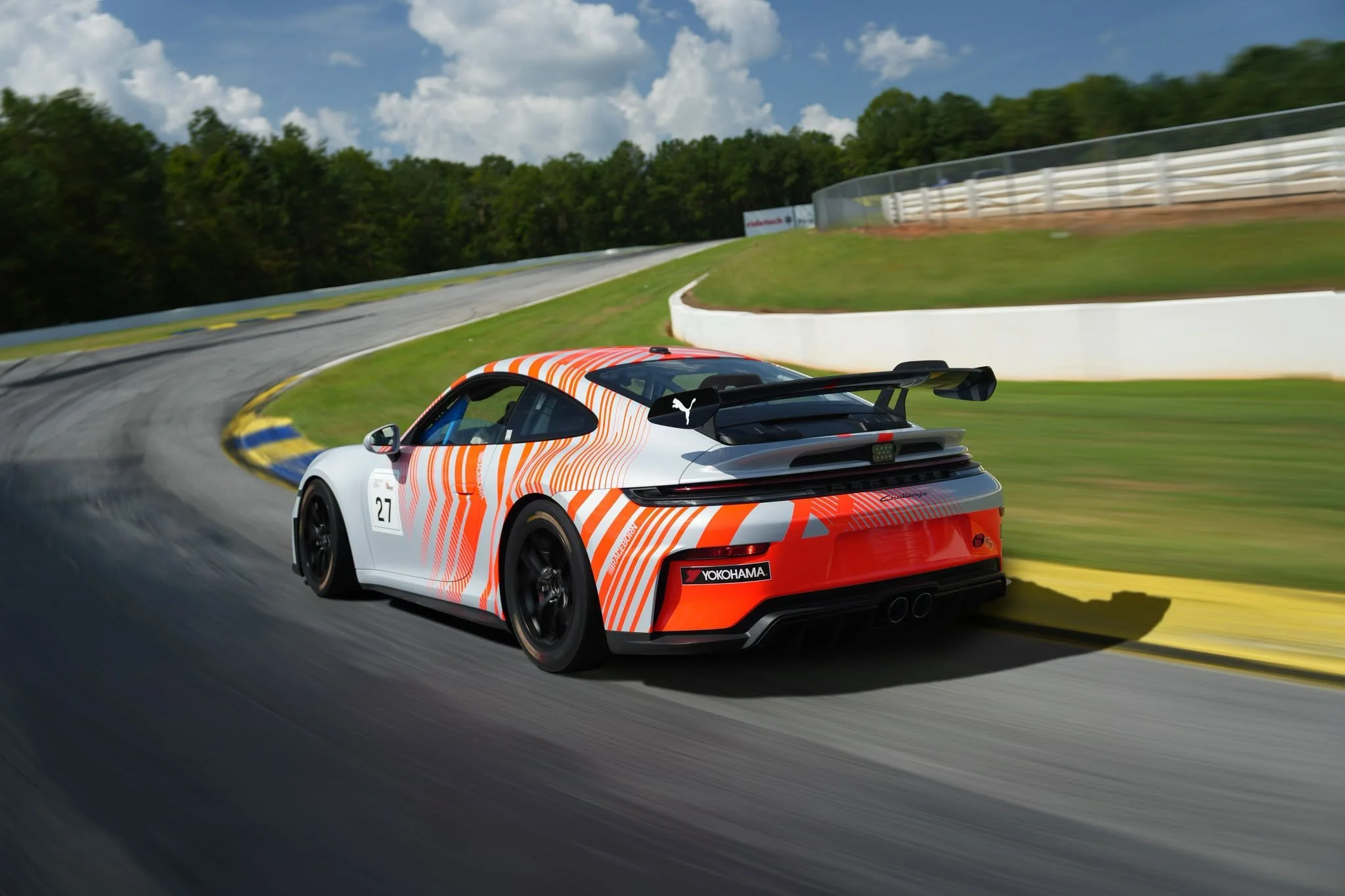
Familiar 911 characteristics from the first laps.
For Aaron Jeansonne, the car’s connection to the rest of the Porsche Motorsport structure became clear almost immediately.
After racing the Porsche 911 Cup car in Carrera Cup North America, Jeansonne recognized the familiar behavior of a 911 from his opening laps in the new race car.
“I was pretty comfortable in the car right away,” Jeansonne – the 2025 Porsche Carrera Cup North America Rookie Champion and recent Indianapolis Carrera Cup race winner said.
“It’s confidence-inspiring. It’s a 911 at the end of the day. Every bit of joy that I get driving the Cup car, this is a version of that for less experienced drivers.
“It was playful at the limit, just like the Cup car. It moves around and it teaches you the fundamentals. It rewarded and punished the same things that the Cup car does.”
A natural next step from Cayman competition.
Andrew Davis reached a similar conclusion after stepping into the 911 Challenge directly from a successful season in the Cayman category of Porsche Endurance Challenge North America by Yokohama where he captured the Pro-Am Cayman championship with William Peluchiwski.
With three decades of professional racing experience spanning generations of Porsche race cars, the highly experienced racer and in-demand driving coach needed only a handful of laps to feel at home.
“It does what you would expect from a 911 race car,” Davis said. “I did five laps to get myself acclimated, and then we started testing tires. I was already ready for it. It felt like home to me.”
Davis’ Cayman experience provided an immediate reference point for the new car’s performance and its position within Porsche Motorsport’s customer racing structure.
“I think it’s a great next step,” Davis said. “Pace-wise, it’s very similar. We ran a little quicker than what the Caymans were doing. Because it’s a Porsche, and because of my experience with the chassis, I instantly felt at home with the car.”
That connection to other Porsche race cars was central to both drivers’ assessments. Jeansonne has raced both the Type 992.1 and Type 992.2 generations of the 911 Cup car and quickly recognized the same underlying characteristics.
“The way it moves and the way it loads the tire is very familiar,” Jeansonne said. “The way it rotates was very Porsche to me, so any Porsche driver is going to get in and feel very comfortable.”
Davis believes the car can teach the techniques drivers need as they progress through Porsche Motorsport’s racing structure.
“One of the greatest things about the 911 chassis is that the driver is one of the most important elements for performance,” Davis said. “I want drivers to understand the fundamentals of driving, the brake release, the rotation and all those things. The 911 is the best chassis to teach that.”
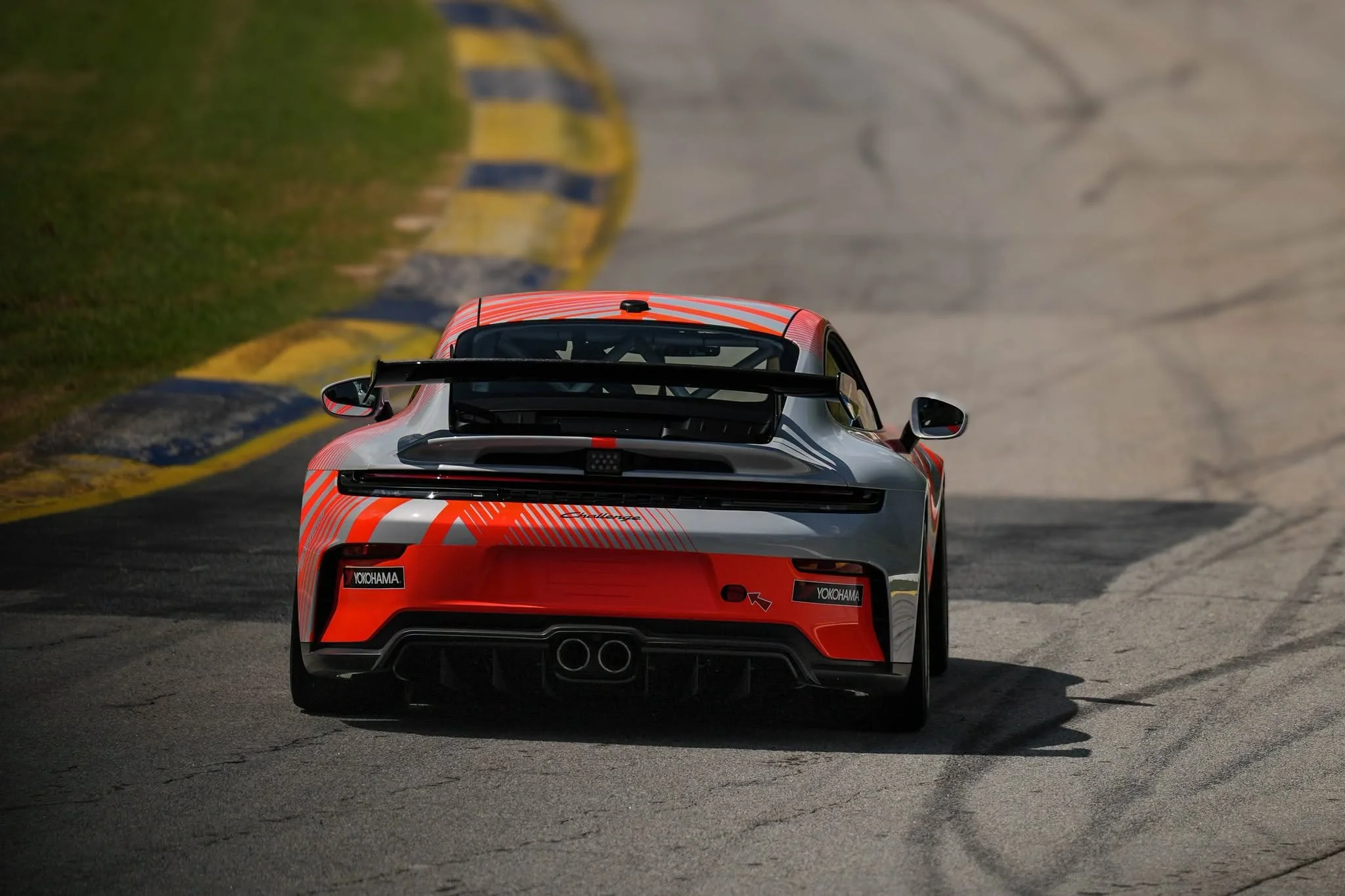
Proven competition hardware delivers braking confidence.
That familiar 911 behavior is supported by dedicated competition hardware, including KW dampers and the braking system from the 911 Cup (Type 992.2). These components put proven motorsport equipment at the heart of the 911 Challenge’s handling and braking performance.
The braking performance made a strong impression on Jeansonne during his first laps at Road America.
“I was braking as late as I do in the Cup car,” Jeansonne said. “Going into Turn 5, I tried to brake a number board early as a starting point, and I came to almost a complete stop by the two board. I thought, ‘I can really go deep in this thing.’”
Davis also praised the braking performance and the adjustable ABS.
“My first press on the brakes going into Turn 3, heavy on the brakes, I thought, ‘I’m happy with this,’” Davis said. “I like the way the ABS interacted. It’s not overly intrusive. It feels like a racing ABS system that is going to work with you and not against you.”
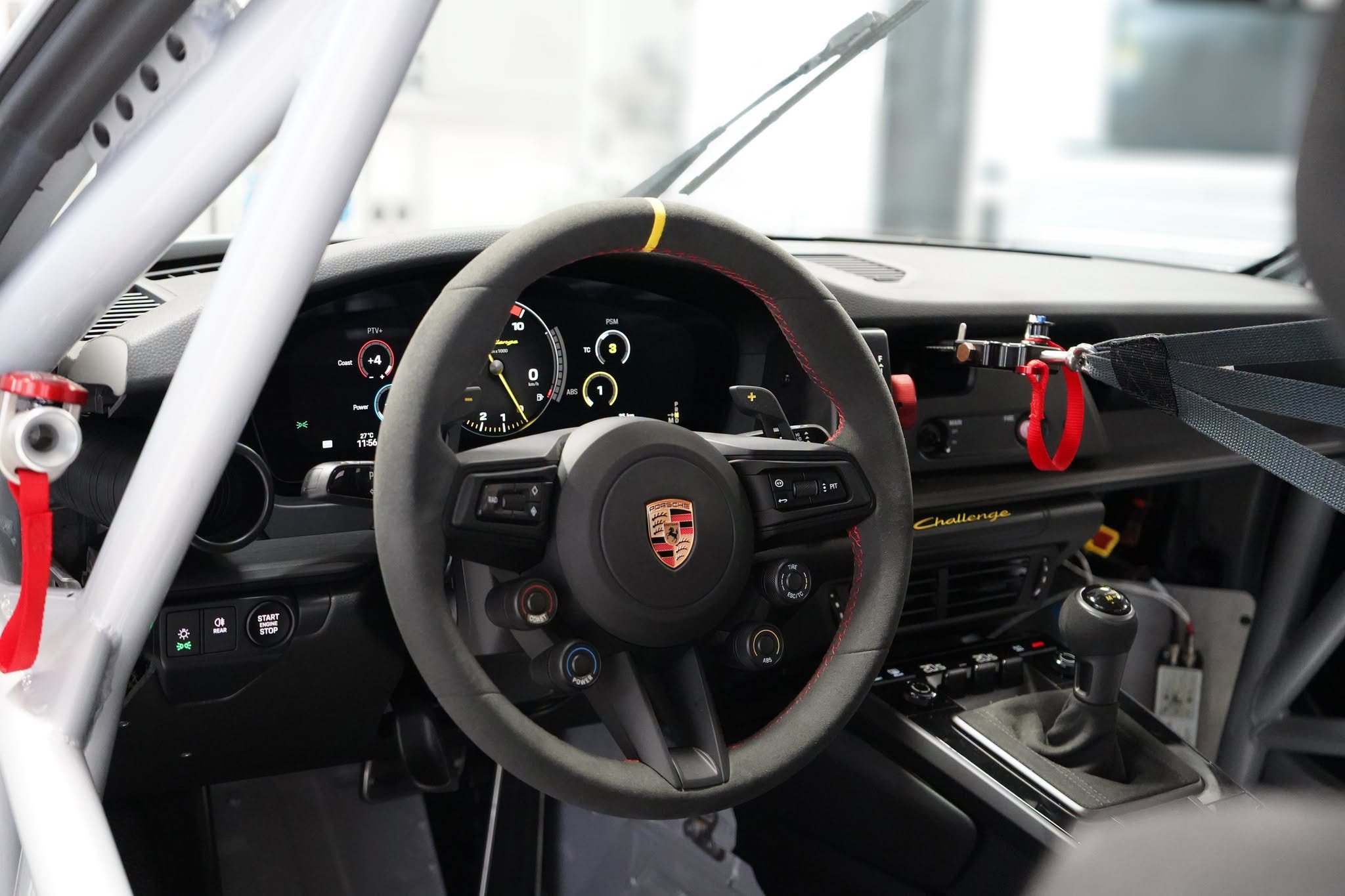
Adjustability at the driver’s fingertips.
The adjustable ABS, traction control and differential settings allowed both drivers to alter the car’s behavior without returning to the pit lane.
“There are a lot of adjustments, so you can make the car how you want it without making setup changes,” Jeansonne said. “The traction control was really powerful. The ABS and differential settings were more about fine-tuning.”
The steering wheel brings that adjustability together in a familiar layout. Derived from the 911 GT3 RS and adapted with racing-specific functions, it combines road-car ergonomics with the controls required for competition. Its familiar appearance reflects the 911 Challenge’s focus on helping drivers make the transition into racing, while its motorsport-specific functionality gives them scope to tune the car as their confidence develops.
For an entry-level race car, that combination serves a practical purpose: integrating the required functions into an accessible control layout. Steering-wheel paddles operate the seven-speed PDK in manual mode, while the ability to change differential settings on the move gives drivers another way to explore the car’s behavior.
Davis was particularly interested in the ability to adjust the differential from the steering wheel.
“We adjust differentials in race cars all the time, but it’s normally not something you can do on the fly,” Davis said. “I felt it immediately, from the low levels to the high levels. It was an advantage to have those adjustments.”
That approach extends to the dashboard. Behind its familiar appearance is a fully customized motorsport display, driven by the same data logger used in the 911 Cup and 911 GT3 R. The display focuses on essential on-track information, including lap timing, tire-pressure monitoring, brake bias adjustment and key drivetrain data, complemented by shift, lock and slip lights.
Race performance with an accessible starting point.
The naturally aspirated 4.0-liter flat-six produces 508 hp and revs to 9,000 rpm. It is paired with a seven-speed PDK transmission offering both manual paddle shifts and automatic operation, reducing the initial workload for drivers entering a race car from a road-car or track-day background.
“The automatic option selects the gears appropriately, and the manual option feels super racy,” Jeansonne said. “For amateur drivers coming from a street-driving background, it gives them some familiarity with how everything feels and sounds.
The same attention to competition equipment extends to driver protection. An FIA-homologated racing seat and six-point harness form part of a driver protection package that also includes a welded roll cage, a 110-liter FT3 fuel cell and an integrated fire-extinguishing system.
A pathway into racing and driver development.
Initial deliveries in 2027 will be prioritized for customers entering Porsche one-make competition. As production increases, additional cars will become available for track-day use, testing, coaching and driver development later in the year.
Jeansonne expects the 911 Challenge to appeal particularly to track-day drivers and amateur competitors who want to develop their skills before advancing further.
“They’re going to feel right at home, but they’re also going to learn how to push a car that doesn’t save you as much,” Jeansonne said. “It is still playful and rewards the right things at the limit. Track-day drivers with aspirations of racing are going to thrive in this car, and I think they’re going to fall in love with it right away.”
Davis believes that accessibility will not diminish the experience for more accomplished competitors.
“This is a real race car,” Davis said. “Once you get to the limit, the limit is the limit, regardless of the speed or the type of car. It is going to be challenging at the limit, but it is also going to be fun and responsive.”
His advice to a driver preparing to experience the 911 Challenge for the first time was equally direct.
“The car is ready for you,” Davis said. “It is going to listen to what you are telling it to do. You don’t need to worry about the speed or the performance. All those things are there. Now it is up to you to learn the skills to drive it to its maximum.”
All Porsche Sprint & Endurance Challenge North America races, plus Porsche Sprint Trophy PCA & POC races stream live – and are available to watch anytime – on the Porsche Motorsport North America YouTube channel.